
Are Dental Implants a Good Option After Long Term Tooth Loss?
Living with missing teeth for months or years can affect much more than the appearance of your smile. Tooth loss can make it harder to chew comfortably, change the way you speak, and gradually affect the bone and tissues that once supported your natural teeth. If you have been missing one or more teeth for a long time, you may wonder whether you have waited too long to consider dental implants.
Fortunately, long term tooth loss does not automatically prevent you from receiving dental implants. In fact, many people who have lived with missing teeth for years may still be candidates for implant treatment. At Oral and Facial Surgery Associates, we provide dental implant treatment for patients who are missing a single tooth, several teeth, or an entire arch. The right treatment plan depends on your oral health, jawbone, medical history, and individual restorative needs.
How Long Term Tooth Loss Can Affect Your Jaw
One of the most important factors we evaluate after long term tooth loss is the condition of the jawbone. Your tooth roots do more than hold your teeth in place. They also help stimulate the surrounding bone. When a tooth is lost, that stimulation is no longer present, and the jawbone in that area can gradually lose volume.
The longer a tooth remains missing, the greater the chance that changes to the bone may occur. This does not mean dental implants are no longer possible. Instead, it means your treatment may require additional planning before an implant can be placed.
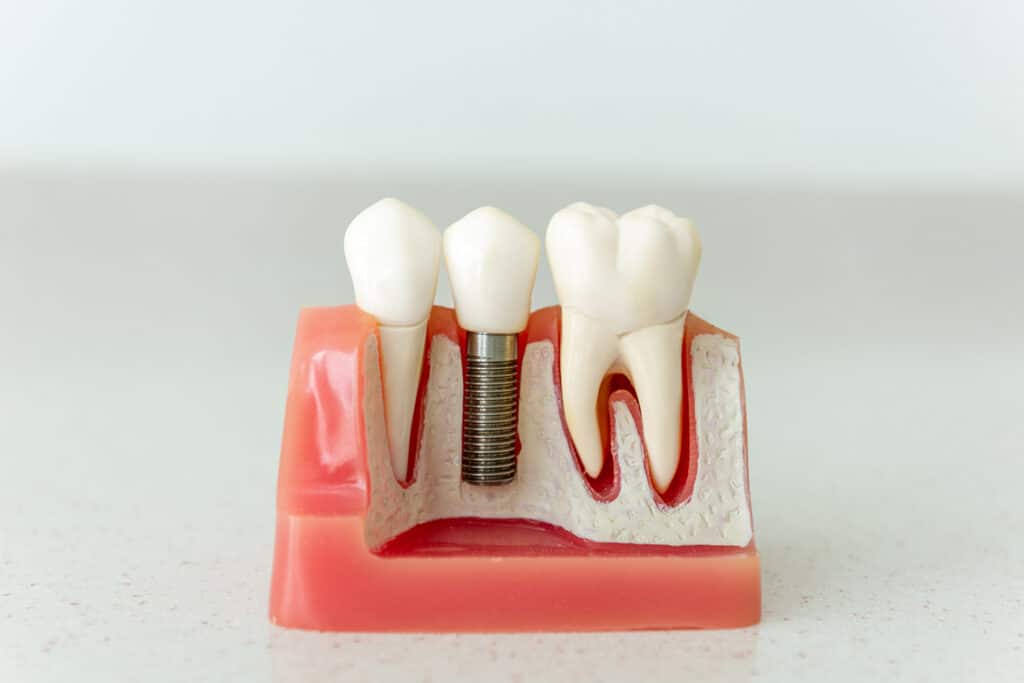
Dental implants are designed to replace the root portion of a missing tooth with a surgically placed implant. Once the implant integrates with the surrounding bone, it can provide a stable foundation for a replacement tooth or another type of dental restoration. Implants can also help prevent additional jawbone loss after they are placed.
When you visit us for an evaluation, we assess your specific anatomy rather than making assumptions based only on how long your teeth have been missing. Our practice uses advanced technology, including guided dental implant placement technology and three-dimensional imaging, to help us plan treatment precisely.
Can You Get Dental Implants If You Have Experienced Bone Loss?
Yes, bone loss does not necessarily rule out dental implant treatment. Some patients who have been without teeth for a significant period may need a bone grafting procedure before an implant can be placed.
Bone grafting is used to rebuild or strengthen areas of the jaw that do not currently have enough bone to provide adequate implant support. Depending on the location and extent of bone loss, different procedures may be considered. Our practice offers bone grafting options such as ridge augmentation, sinus lifts, socket preservation, and other techniques designed to promote bone growth and prepare the jaw for implant placement.
The need for bone grafting varies from patient to patient. Some people who have been missing teeth for years may still have sufficient bone for implant placement, while others may require additional treatment first. This is one reason a comprehensive examination is so important.
During your first visit, we evaluate your individual situation, review information provided by your dentist when applicable, and take diagnostic images when necessary. We then discuss our findings and create a treatment plan based on your needs.
If bone grafting is recommended, it may add another stage to the implant process. Although this can make treatment take longer, rebuilding lost bone may make it possible for patients who previously assumed they were not candidates to move forward with dental implants.
Benefits of Dental Implants After Long Term Tooth Loss
Replacing teeth after living with tooth loss for a long time can provide several important benefits. Dental implants are designed to be a long term tooth replacement option that restores both appearance and function.
One of the biggest advantages is stability. Because implants are placed into the jawbone, they provide support that more closely resembles the foundation of natural teeth. Depending on your needs, implants can be used to replace one missing tooth, multiple teeth, or an entire arch.
Dental implants can also help preserve the jawbone and facial structure. When bone loss continues over time, changes to the lower portion of the face can become more noticeable. Replacing missing teeth with implants can help reduce further bone loss and support the structures surrounding your smile.
Another benefit is durability. With proper oral hygiene and regular professional dental care, dental implants can remain in place for many years. The restoration attached to an implant may eventually need replacement, but the implant itself is designed to provide lasting support.
For patients who have lost many or all of their teeth, implant-supported full arch restorations may also be an option. Our surgeons provide dental implant procedures ranging from individual implants to full arch implant treatment, allowing us to develop a plan based on the number of missing teeth and the condition of the supporting bone.
Find Out Whether Dental Implants Are Right for You
If you have been living with missing teeth for years, you do not have to assume that dental implants are no longer an option. The amount of time that has passed is only one part of determining whether implant treatment is appropriate. Your bone health, gum health, overall health, and treatment goals all play a role.
At Oral and Facial Surgery Associates, we have provided dental implant care to patients throughout Cincinnati and Northern Kentucky for more than 35 years. Our team includes Board-Certified Oral and Maxillofacial Surgeons, and we use advanced surgical technology to plan and perform dental implant procedures.
If bone loss has occurred, we can evaluate whether bone grafting or another approach may help prepare you for implant placement. The best way to know what is possible is to have your jaw and oral health evaluated individually. Whether you are missing one tooth or an entire arch, we can help you understand your options and develop a treatment plan designed around your needs.
Frequently Asked Questions About Dental Implants
How do I know if I have enough bone for a dental implant?
The amount and quality of available bone need to be evaluated through an examination and appropriate diagnostic imaging. Our surgeons use advanced technology to assess your anatomy and develop an individualized implant treatment plan.
Does bone grafting mean I cannot get dental implants?
No. Bone grafting is often performed specifically to help create a stronger foundation for dental implants when bone volume has been lost. Depending on your needs, procedures such as ridge augmentation or a sinus lift may be considered before implant placement.
How long does it take for a dental implant to heal?
Initial healing after dental implant surgery typically takes about a week, but the implant generally needs several months to integrate with the jawbone. Your overall treatment timeline can vary depending on your health, the number of implants placed, and whether additional procedures such as bone grafting are required.
Can dental implants replace several missing teeth?
Yes. Dental implants can be used to replace a single tooth, several missing teeth, or an entire arch of teeth. We evaluate each patient's needs to determine the type and number of implants that may provide the appropriate support for the planned restoration.
Am I too old to consider dental implants?
Age alone does not determine whether someone is a candidate for dental implants. We consider factors such as your general health, oral health, jawbone, and ability to heal when evaluating treatment options.
We are Oral and Facial Surgery Associates, a Cincinnati oral and maxillofacial surgery practice providing comprehensive surgical care, including dental implants, bone grafting, and full arch implant treatment. For more than 35 years, we have served patients throughout Greater Cincinnati and Northern Kentucky with a focus on advanced technology, personalized care, patient comfort, and successful surgical outcomes. To schedule a consultation and learn whether dental implants may be an option after long term tooth loss, contact us today.